
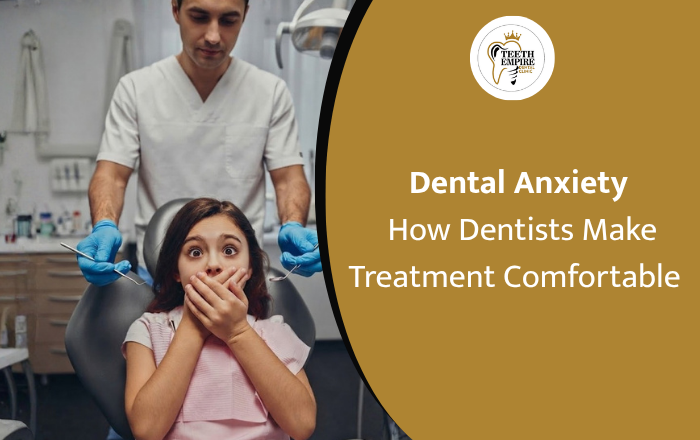
Does your heart beat faster the moment you sit in the dental chair? Maybe a painful memory from childhood makes you postpone that appointment again and again. You are not alone. Dental anxiety is very common, and dentists see nervous patients every day.
This guide explains what dental anxiety is, how dentists make treatment more comfortable, and what you can do before your next visit.
What Is Dental Anxiety?
Dental anxiety is a feeling of fear, worry or stress linked to visiting the dentist or having dental treatment. It can range from mild nervousness to strong fear that makes a person avoid the dentist for years. When the fear is very intense, it is sometimes called dental phobia.
Common signs of dental anxiety
- Trouble sleeping the night before an appointment
- Sweating, a racing heart or feeling sick in the waiting area
- Cancelling appointments, even when there is pain
Why do people feel scared of the dentist?
Common reasons include:
- A painful or upsetting dental experience in the past
- Fear of injections or needles
- The sound and vibration of dental instruments
- Feeling a loss of control while lying back in the chair
How Do Dentists Help Anxious Patients Feel Comfortable?
Dentists help nervous patients mainly through clear communication, proper numbing, a gentle pace and, when needed, sedation. Feeling heard and staying informed often makes the biggest difference.
1. Listening to your worries first
A good first visit usually starts with a conversation, not a procedure. Telling your dentist what scares you helps them plan the visit around you. If you had a bad experience before, say so. There is nothing to feel shy about.
2. Explaining each step before doing it
Many dentists use a simple method often called tell, show, do. They tell you what will happen, show you the instrument, and only then begin. Knowing what to expect takes away much of the fear.
3. Agreeing on a stop signal
Before treatment starts, you and your dentist can agree on a signal, such as raising your left hand. When you raise it, the dentist pauses and lets you rest.
4. Making sure the area is properly numb
For procedures that may cause discomfort, dentists use local anaesthesia. This medicine numbs only the area being treated while you stay fully awake. Many dentists first apply a numbing gel so the injection feels like a small pinch. If you still feel pain during treatment, tell your dentist right away.
5. Shorter visits and gentle distractions
If long appointments feel overwhelming, treatment can sometimes be split into shorter sessions. Starting with something simple, like a checkup or cleaning, helps you build trust first. Music through earphones can also help.
Is Sedation an Option for Dental Anxiety?
Yes, for some patients and some procedures, sedation can help. Sedation uses medicine to help you feel relaxed during treatment. Whether it is suitable depends on your health, medical history, level of anxiety and the procedure planned.
Depending on the case, many dentists may consider:
- Inhaled sedation: A gas, often called laughing gas, is breathed in through a small mask. You stay awake but feel calmer.
- Oral sedation: A tablet taken before the appointment as advised. You may need someone to take you home afterwards.
- Intravenous sedation: Medicine given through a vein by a trained team with careful monitoring, used for selected cases.
Sedation is not right for everyone and always needs a proper assessment first. At Teeth Empire Dental Clinic, optional sedation is mentioned for tooth extractions and gum surgeries to help ease anxiety. Your dentist can explain whether it suits you.
Can Modern Dental Tools Make Treatment Easier?
Yes, modern equipment can make some procedures gentler. The clinic uses laser and microscopic dentistry for selected treatments. Lasers may mean less bleeding and swelling for some gum procedures. The clinic also uses a 3D oral scanner for digital impressions, which some people with a strong gag reflex may find easier than traditional impression material.
How Can You Calm Your Nerves Before a Dental Visit?
A little preparation can make your appointment feel more manageable:
- Book a morning slot so you have less time to worry.
- Tell the clinic when booking that you feel anxious.
- Bring a family member or friend for support, if allowed.
- Avoid too much tea or coffee before the visit, as caffeine can make you jittery.
- Practise slow breathing. Breathe in for four counts and out slowly.
Helping children feel at ease
Children often pick up fear from adults. Talk about the dentist in a positive, simple way and avoid words like “pain” or “injection”. Early visits help children get used to the clinic. You can read more about the clinic’s dental treatment for kids.
Why Should You Not Delay Dental Care Because of Fear?
Avoiding the dentist can turn a small issue into a bigger one. A cavity that needs a simple filling today may need a root canal or an extraction later.
Please see a dentist soon if you notice:
- Tooth pain that lasts more than a day or two
- Swelling in the gums, face or jaw
- A broken or loose tooth
- Pain while chewing or a bad taste in the mouth
Facial swelling with fever, or difficulty swallowing or breathing, needs urgent medical attention. If your fear feels overwhelming, talking to your doctor or a counsellor can also help.
Frequently Asked Questions
1. Is it normal to be scared of the dentist?
Yes, it is very normal, and it can affect people of any age. Dentists treat anxious patients regularly and will not judge you for feeling this way. Sharing your fears at the start helps the team plan your visit around your needs.
2. Does the dental injection hurt?
Most people feel only a small pinch or pressure. Many dentists apply a numbing gel first and give the injection slowly, which can make it more comfortable. Once the anaesthesia works, you should not feel sharp pain. If something hurts, let your dentist know straight away.
3. Can I ask my dentist to stop during treatment?
Yes. You can agree on a hand signal before treatment begins. When you raise your hand, the dentist pauses so you can rest, swallow or talk. This sense of control often makes the visit less stressful. You do not need to explain why you want a pause.
4. Can I be sedated for a tooth extraction?
It depends on your health, the type of extraction and your level of anxiety. Sedation is considered only after a proper check. At Teeth Empire Dental Clinic, optional sedation is mentioned for extractions and gum surgeries. Your dentist will advise whether it is safe and suitable for you.
5. How can I help my child overcome fear of the dentist?
Start visits early, keep your own tone calm, and never use the dentist as a threat. Role play at home can make the visit feel familiar. Praise your child for being brave afterwards. If your child has a toothache, see a dentist soon rather than waiting.
Feeling Nervous About Your Next Dental Visit?
Dental anxiety is real, but it does not have to keep you away from the care you need. Clear communication, proper numbing and a gentle pace can make treatment far more comfortable.
At Teeth Empire Dental Clinic, Dr. Prithvi Bonde, BDS, MDS (Prosthodontist and Implantologist), with 11+ years of experience, provides dental care for patients in Kharadi and nearby areas. If you feel nervous, mention it when you book so your concerns can be discussed first.
Address: Zen Square, Kharadi, 1st Floor, Office No. 106, Panchshil Towers Rd, opposite EON Free Zone Phase 2, Kharadi, Pune, Maharashtra 411014
Phone: 89994 21629
You can also book an appointment online.