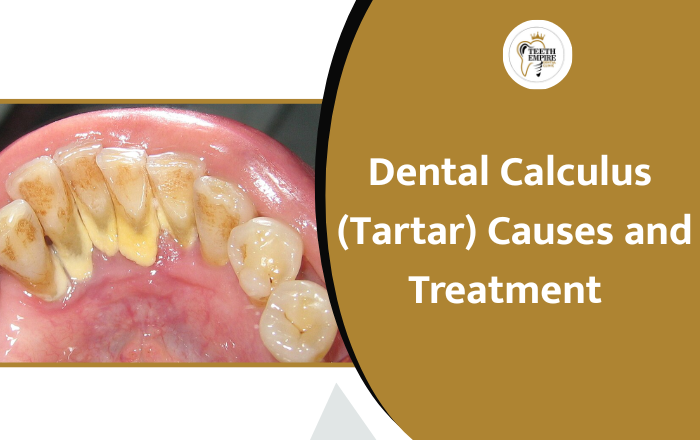
Welcome! If you’ve ever noticed hard yellow or brown buildup on your teeth, you’re not alone. This stubborn layer is known as dental calculus (tartar), and it forms when soft plaque stays on the teeth for too long.
Even with regular brushing, once tartar forms, it becomes very hard and sticks tightly to the teeth. But the good news is that with the right care and timely treatment, you can keep your smile healthy and clean.
This guide will help you understand dental calculus, why it happens, and how you can treat and prevent it in a simple, stress-free way.
What Is Dental Calculus (Tartar)?
Dental calculus or tartar is hardened plaque that sticks firmly to your teeth. Think of it like the hard water stains you see on bathroom faucets—except it’s happening in your mouth.
Unlike soft plaque that brushes away easily, tartar is rock-hard and crusty. It forms above and below your gum line and can only be removed by a dentist.
The Difference Between Plaque and Tartar
- Plaque is a soft, sticky film of bacteria that forms daily on your teeth. You can remove it by brushing and flossing.
- Tartar is calcified plaque. Once plaque hardens into tartar, your toothbrush can’t remove it.
Important fact: Tartar can start forming within 24 to 72 hours if plaque isn’t cleaned properly.
5 Main Causes of Tartar Buildup
1. Poor Brushing Habits
Not brushing twice daily or rushing through it in 30 seconds lets plaque pile up and harden into tartar on teeth. Missing those back teeth? That’s where problems start.
2. Skipping Flossing
Your toothbrush only cleans about 60% of your tooth surfaces. The spaces between teeth are where tartar loves to hide. No flossing means easy tartar formation.
3. Eating Too Much Sugar and Starch
Bacteria in your mouth feed on sugars and starches, creating acids that build plaque. Frequent snacking on sweets, sodas, or chips speeds up tartar buildup.
4. Dry Mouth
Saliva naturally washes away food bits and bacteria. If you have dry mouth from medications or health issues, plaque accumulates faster and turns into dental calculus.
5. Smoking and Tobacco Use
Tobacco users have much higher rates of tartar buildup. Smoking creates a sticky environment where plaque thrives and hardens quickly. Studies show smokers are almost twice as likely to develop tartar compared to non-smokers.
Warning Signs You Have Tartar
Look out for these clear signs:
- Yellow or brown deposits along your gum line
- Rough texture when you touch your teeth with your tongue
- Bad breath that stays even after brushing
- Bleeding gums when you brush or floss
- Swollen gums that feel tender
If you notice any of these, it’s time to visit your dentist.
Why Tartar Is Dangerous
Tartar isn’t just ugly—it threatens your teeth and gums in serious ways.
▸Gum Disease
Tartar harbors bacteria that irritate your gums. This starts as gingivitis (early gum disease) but can progress to periodontitis, where gums pull away from teeth and bone loss happens.
▸Tooth Decay
Bacteria trapped in tartar produce acids that eat through your tooth enamel, causing cavities.
▸Tooth Loss
Gum disease caused by untreated tartar is one of the leading reasons adults lose teeth. Nearly 50% of adults over 30 have some form of gum disease, often triggered by tartar buildup.
Can You Remove Tartar at Home?
The honest answer: No.
Once plaque hardens into dental calculus, you cannot remove it with brushing, flossing, or DIY tools. Those tartar removal scrapers online? They can damage your teeth and gums.
What you CAN do:
- Prevent new tartar by brushing and flossing daily
- Use tartar-control toothpaste
- Rinse with antibacterial mouthwash
How Dentists Remove Tartar
▸Scaling (Deep Cleaning)
This is the most common tartar removal method. Your dentist uses special tools to carefully scrape tartar from above and below your gum line.
The process is:
- Safe when done by a trained dentist
- Usually painless—you’ll feel only minor pressure
- Quick—typically takes 30 to 60 minutes
▸Root Planing
For tartar deep below the gums, root planing smooths the tooth roots to help gums heal and reattach.
▸Polishing
After tartar removal, your teeth are polished smooth, making it harder for plaque to stick again.
5 Ways to Prevent Tartar Buildup
1. Brush Twice Daily for Two Minutes
Use fluoride toothpaste and brush all surfaces—front, back, and top of each tooth.
2. Floss Every Day
Flossing removes plaque between teeth before it turns into tartar.
3. Use Mouthwash
Antibacterial mouthwash helps kill bacteria and reduce plaque.
4. Cut Back on Sugar
Limit sodas, candies, chips, and white bread. Choose fruits, vegetables, and nuts instead.
5. Visit Your Dentist Every 6 Months
Regular teeth cleaning is your best defense against tartar. Even with good home care, some areas are hard to reach.
Take Action: Protect Your Smile Today
Tartar doesn’t disappear on its own—it only gets worse. The longer you wait, the more damage it causes.
If you’re in Kharadi and need professional teeth cleaning and teeth polishing, visit Teeth Empire Dental Clinic, led by Dr. Prithvi Bonde.
Why Choose Teeth Empire Dental Clinic?
✅ Gentle, comfortable tartar removal
✅ Modern equipment for safe treatment
✅ Years of experience with Dr. Prithvi Bonde
✅ Convenient location in Kharadi
Your journey to a healthier smile starts here.
📞 Call now to book your appointment
📍 Visit Teeth Empire Dental Clinic in Kharadi