Watching your baby smile is one of the greatest joys of parenthood. But here’s something many parents don’t realize until it’s too late — that innocent bedtime bottle could be quietly harming those tiny teeth. Bottle feeding tooth decay, also known as baby bottle tooth decay, is far more common than most people think. The good news? It’s almost completely preventable. Let’s walk through everything you need to know to protect your little one’s smile.
What Is Baby Bottle Tooth Decay?
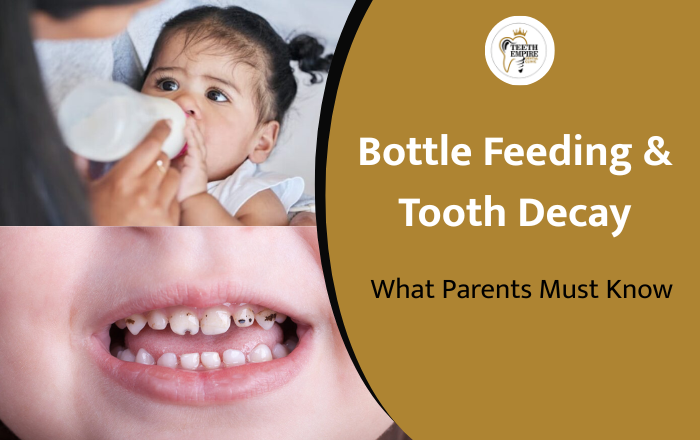
Baby bottle tooth decay is early childhood tooth decay caused when sugary liquids — milk, formula, juice, or even breast milk — stay in contact with your baby’s teeth for too long. These sugars feed harmful bacteria in the mouth, which then produce acids that slowly destroy tooth enamel.
Baby teeth have thinner enamel than adult teeth, making them much more vulnerable to damage.
Why Baby Teeth Are More Important Than You Think
Many parents believe baby teeth don’t matter much since they’ll fall out anyway. This is a common and costly mistake.
Baby teeth help your child:
- Chew food properly for good nutrition
- Speak and form words clearly
- Hold space for permanent teeth to grow in straight
Losing baby teeth too early due to bottle rot in babies can lead to crooked permanent teeth, difficulty eating, and even speech problems.
How Does Bottle Feeding Cause Tooth Decay?
Every drink except plain water contains some form of sugar. When your baby feeds, sugar coats their teeth. Bacteria in the mouth feed on this sugar and release acid — and that acid is what causes tooth decay from bottle feeding.
The biggest mistake most parents make? Putting baby to bed with a bottle.
During sleep, saliva production slows down. Saliva is the mouth’s natural cleanser. Without it, sugary liquid sits on teeth for hours — making nighttime bottles one of the leading causes of baby bottle decay.
5 Warning Signs Every Parent Should Know
Decay in babies often happens silently. Watch out for:
- White spots or lines near the gumline — the earliest sign
- Brown or black discoloration on teeth
- Visible holes or pits in teeth
- Fussiness when eating hot, cold, or sweet foods
- Bad breath that doesn’t go away.
If you spot any of these signs, book a dental visit immediately. Early action saves teeth.
6 Simple Ways to Prevent Baby Bottle Tooth Decay
1. Never Put Your Baby to Bed With a Bottle
If your baby needs comfort at bedtime, offer a pacifier or a bottle of plain water instead. This one habit change can protect your child’s teeth significantly.
2. Clean Gums Even Before the First Tooth
After every feed, gently wipe your baby’s gums with a clean, damp cloth. This removes bacteria early and builds a healthy routine.
3. Brush As Soon As the First Tooth Appears
Start brushing with a soft infant toothbrush and a tiny smear of fluoride toothpaste — about the size of a grain of rice — from the moment that first tooth comes in.
4. Move From Bottle to Cup by Age 1
Pediatric dentists recommend transitioning away from bottles by 12–18 months. Sippy cups reduce the amount of liquid that pools against teeth.
5. Never Dip Pacifiers in Sugar or Honey
This directly feeds harmful bacteria on your baby’s teeth. Always keep pacifiers clean with plain water.
6. Visit the Dentist by Your Child’s First Birthday
The American Academy of Pediatric Dentistry recommends a first dental visit by age 1 — not age 3 or 4. Early visits catch problems before they grow.
What Happens If You Ignore It?
Untreated baby bottle tooth decay doesn’t just go away on its own. It can lead to:
- Severe tooth pain and infection
- Early tooth loss, which affects how permanent teeth grow in
- Trouble eating, sleeping, and speaking
- Bigger, more costly dental treatments later
- Dental fear — children who experience dental pain early often develop lasting anxiety around dental visits
The earlier the problem is caught, the simpler the fix.
FAQs
Q1 : Can breast milk cause tooth decay?
Yes. Breast milk contains natural sugars that can contribute to decay, especially with frequent nighttime feeding once teeth have appeared. Clean your baby’s teeth after feeding.
Q2: What toothpaste should I use for my baby?
Under age 3 — use a grain of rice-sized smear of fluoride toothpaste. Ages 3–6 — use a pea-sized amount. Avoid adult toothpastes entirely.
Q3: My toddler won’t let me brush their teeth. What do I do?
Make it fun! Use a two-minute kids’ brushing song, let them brush your teeth while you brush theirs, or try a child-friendly flavored toothpaste. Consistency is what matters most.
Q4: Can baby bottle tooth decay affect permanent teeth?
Yes. Severe decay in baby teeth can damage the permanent tooth developing underneath. It can also cause spacing issues that lead to crooked permanent teeth.
Give Your Child a Healthy, Pain-Free Smile
Bottle feeding tooth decay is common — but it doesn’t have to happen to your child. With simple daily habits, the right information, and timely dental visits, your little one’s smile can stay bright and healthy from the very start.
Worried About Your Child’s Teeth? Visit Teeth Empire Dental Clinic, Kharadi
If you’re in Kharadi, Pune, and want to make sure your child’s teeth are growing in healthy and strong, Teeth Empire Dental Clinic is a great place to start.
Led by Dr. Prithvi Bonde, the clinic offers gentle, child-friendly dental care — from routine check-ups to treatment for baby bottle tooth decay — in a warm, welcoming space where kids actually feel at ease.
👉 Book your child’s first dental visit at Teeth Empire Dental Clinic, Kharadi today.
Because a healthy smile in childhood is one of the best gifts you can give your child.
Contact Teeth Empire Dental Clinic, Kharadi, Pune — and let Dr. Prithvi Bonde take care of your child’s smile.