
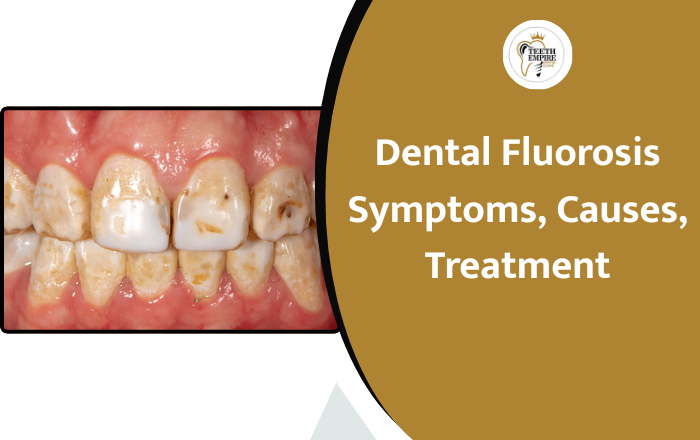
Have you ever looked in the mirror and noticed white spots or streaks on your teeth? Maybe your child’s teeth have a chalky appearance that concerns you? These could be signs of dental fluorosis, a common condition that affects many people across India and around the world.
Don’t worry—you’re not alone, and there’s help available. Dental fluorosis is usually just a cosmetic issue, and today’s dental treatments can restore your smile beautifully. Whether you’re dealing with mild discoloration or more visible staining, understanding what causes it and how to treat it is the first step toward feeling confident about your smile again.
In this blog, we’ll explain everything about dental fluorosis—what it looks like, why it happens, and what you can do about it. Let’s get started!
What is Dental Fluorosis?
Dental fluorosis is a condition that affects the appearance of your tooth enamel. It happens when your teeth are exposed to too much fluoride while they’re still developing under the gums—typically during childhood.
Think of it this way: fluoride is like medicine for your teeth. The right amount makes them strong and protects against cavities. But too much during those early years can change how the enamel forms, leading to discoloration.
The good news? Dental fluorosis doesn’t make your teeth weaker or more prone to decay. In most cases, it’s simply about how your teeth look, not how they function.
Types of Dental Fluorosis
– Dental fluorosis appears differently depending on how much fluoride exposure occurred:
– Mild fluorosis shows up as faint white lines or small spots on the teeth. Many people don’t even notice these unless they look closely.
– Moderate fluorosis creates larger white patches that are more obvious when you smile.
– Severe fluorosis can cause brown or gray stains and may make the enamel surface feel rough or uneven.
Symptoms of Dental Fluorosis
Wondering if you or your child has dental fluorosis? Here are the main signs to look for:
Common Signs
The most common symptom is white spots or streaks on the tooth enamel. These usually appear on the permanent teeth and are most visible on the front teeth.
Some people notice their teeth have a chalky or cloudy appearance, especially when the teeth are dry.
In more serious cases, you might see yellow or brown staining on the teeth. The enamel might also feel slightly rough or pitted instead of smooth.
Some people with moderate to severe dental fluorosis experience increased tooth sensitivity to hot or cold foods and drinks.
When Should You Visit a Dentist?
If you notice any unusual discoloration on your teeth or your child’s teeth, it’s worth getting it checked. While dental fluorosis is usually harmless, a dentist can confirm the diagnosis and discuss treatment options if you’re unhappy with how your teeth look.
What Causes Dental Fluorosis?
Understanding what causes dental fluorosis can help you prevent it in your children and know why it happened to you.
The Fluoride Connection
Fluoride is a mineral that helps prevent tooth decay. It’s added to many water supplies in India and is found in toothpaste and mouth rinses. While fluoride is beneficial, getting too much during childhood—when teeth are still forming—can lead to dental fluorosis.
Common Sources of Too Much Fluoride
– Drinking water is the main source in many areas. Some regions in India naturally have high fluoride levels in their groundwater, while others add fluoride to the public water supply.
– Swallowing toothpaste is a big cause in young children. Kids often like the taste of toothpaste and may swallow it instead of spitting it out.
– Fluoride supplements given without proper guidance can contribute to overexposure.
Some foods and beverages, especially tea, are naturally high in fluoride.
The Critical Time Period
Here’s something important to know: dental fluorosis can only develop while teeth are forming, typically from birth until about age 8. Once your permanent teeth have fully formed and come through the gums, you cannot develop fluorosis anymore.
This is why prevention focuses on young children, and why adults cannot develop new dental fluorosis.
How is Dental Fluorosis Diagnosed?
During a dental visit, your dentist will examine your teeth and ask about your fluoride exposure during childhood. They’ll look at the pattern and color of any discoloration to determine if it’s dental fluorosis or another condition.
It’s important to get the right diagnosis because other issues like tooth decay or enamel defects can look similar but need different treatments.
Treatment Options for Dental Fluorosis
The good news is that dental fluorosis treatment can dramatically improve how your teeth look. The right option depends on how severe your fluorosis is.
For Mild Cases
Teeth whitening is often the first option for mild dental fluorosis. Professional whitening at the dentist’s office can help blend the white spots with the rest of your tooth color.
Microabrasion is a technique where the dentist gently removes a thin layer of enamel to reduce the appearance of white spots. It’s quick and works well for surface discoloration.
For Moderate to Severe Cases
– Dental bonding involves applying a tooth-colored resin to cover the stained areas. It’s affordable and can be done in a single visit.
– Veneers are thin shells that cover the front of your teeth. They’re a popular choice for dental fluorosis treatment when multiple teeth are affected because they create a uniform, natural-looking smile.
Crowns may be recommended if the fluorosis is severe and has damaged the tooth structure significantly.
What to Expect
Most dental fluorosis treatments are straightforward and give excellent results. Your dentist will explain which option works best for your situation, how long the treatment lasts, and what it will cost.
Can You Prevent Dental Fluorosis?
Yes! Since dental fluorosis only develops during childhood, prevention is all about managing fluoride exposure in young children.
Tips for Parents
– Monitor toothpaste use: Children under 3 should use only a rice-grain-sized amount of toothpaste. Kids ages 3-6 need just a pea-sized amount.
– Teach proper brushing: Help your child learn to spit out toothpaste instead of swallowing it.
– Know your water: If you live in an area with high natural fluoride in the water, talk to your dentist about whether your child needs fluoride toothpaste.
– Avoid unnecessary supplements: Only give fluoride supplements if your dentist or doctor specifically recommends them.
– Supervise brushing: Watch young children while they brush to make sure they’re using the right amount of toothpaste.
Living with Dental Fluorosis
Many people with mild dental fluorosis don’t feel the need for treatment. The white spots are often barely noticeable, and the teeth are healthy and strong.
For others, especially those with more visible staining, dental fluorosis treatment can make a big difference in confidence and self-esteem. There’s no right or wrong choice—it’s about what makes you feel comfortable.
Take the Next Step Toward Your Best Smile
If you’re concerned about dental fluorosis or notice discoloration on your teeth, don’t wait. A simple dental consultation can answer your questions and help you understand your options.
Looking for Dental Fluorosis Treatment in Kharadi?
Teeth Empire Dental Clinic in Kharadi offers excellent care for dental fluorosis treatment. Dr. Prithvi Bonde and the team provide a range of treatment options, from simple whitening to veneers and bonding, all tailored to your specific needs and budget.
Whether you have mild white spots or more noticeable staining, Teeth Empire Dental Clinic can help you achieve the smile you want. The clinic focuses on making you feel comfortable while delivering results that make a real difference.
Ready to improve your smile? Contact Teeth Empire Dental Clinic in Kharadi today!
📍 Teeth Empire Dental Clinic, Kharadi
👨⚕️ Dr. Prithvi Bonde – Dental Fluorosis Treatment Specialist
Don’t let dental fluorosis hold you back. Your confident smile is just one appointment away!
Frequently Asked Questions
Q1. Is dental fluorosis dangerous?
No, dental fluorosis is mainly a cosmetic issue. It doesn’t make your teeth weaker or cause decay. Only severe cases might need treatment for structural reasons.
Q2. Can dental fluorosis be reversed naturally?
Unfortunately, no. Once dental fluorosis has affected the enamel during tooth development, it cannot reverse on its own. However, dental treatments can improve or eliminate the appearance of fluorosis.
Q3. How much does treatment cost?
Dental fluorosis treatment costs vary. Whitening might cost ₹5,000-15,000, while veneers range from ₹8,000-25,000 per tooth. Your dentist can give you a specific estimate.